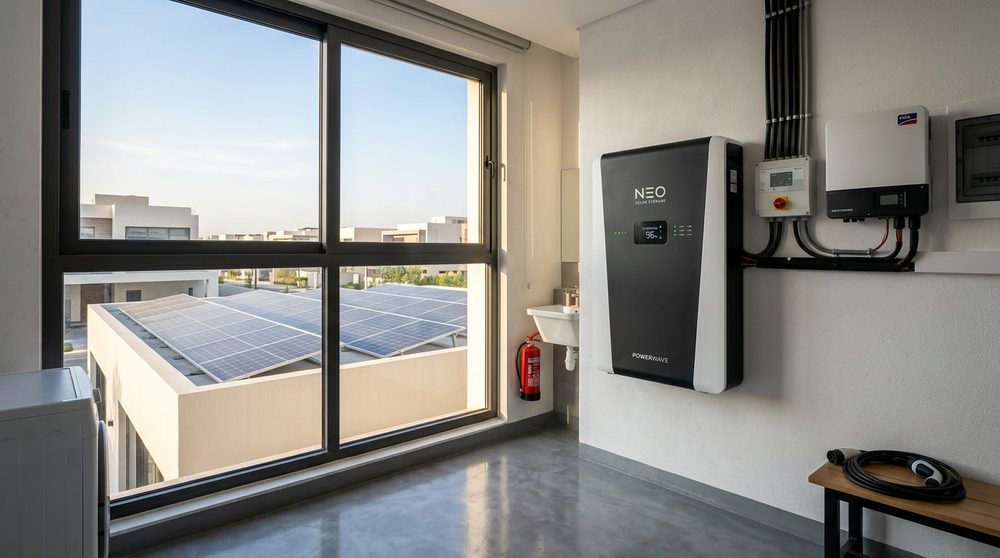
Battery storage can shift solar energy to later use or support selected circuits during an outage, but it is not an automatic fit for every property.
SolarPanelUAE is an independent lead-generation platform. We connect eligible requests with third-party partners; the partner confirms design, compatibility, safety, price and warranty terms.
Questions for the partner
- Which circuits need backup and for how long?
- What are the usable capacity, continuous power and surge assumptions?
- Does the inverter support the proposed battery and operating mode?
- What protection, placement, ventilation, monitoring and maintenance are included?
- How do local utility treatment and the property’s consumption affect the recommendation?
Compare solar-only and solar-plus-battery proposals using the same property assumptions.
Last reviewed: 2026-09-26. Costs, utility requirements and partner terms should be confirmed before acting.
☀️ Ready to explore your solar options?
Tell us about your property and we will route your request to a suitable installer partner.
Explore Solar Options for My Property →